
AI assistant on WhatsApp: what Meta’s rules say and where to set limits
What Meta’s terms say about AI providers on WhatsApp, what changes for a company that serves customers with AI and what limits to set for an assistant that sells.
A small hotel put an AI assistant on its WhatsApp. It worked well until a guest asked whether they could cancel at no cost, and the assistant said yes, because it “sounded reasonable”. The real policy said otherwise. Nobody had written the assistant’s limits, and nobody had read the rules of the platform where it was working either.
What do Meta’s rules say about AI on WhatsApp?
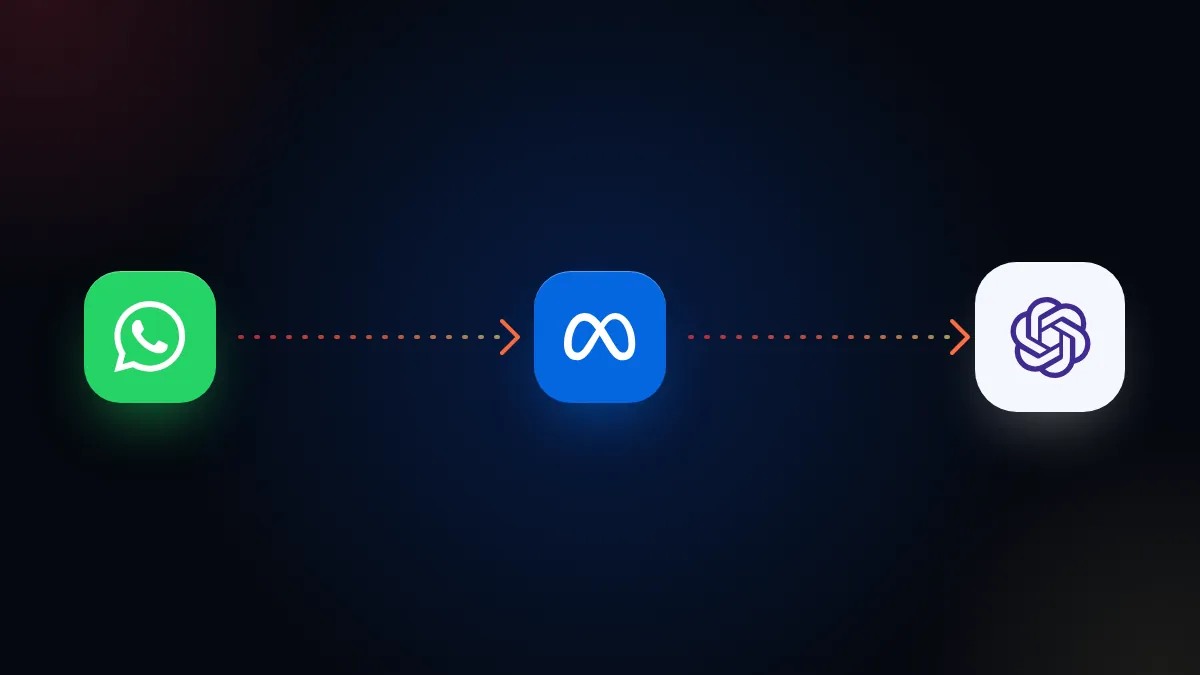
Meta’s terms prohibit AI providers from using the WhatsApp Business platform when AI is the main functionality they offer. In the WhatsApp Business platform terms, section 4.7, “AI Providers”, states that they are “strictly prohibited” from accessing or using the platform, directly or indirectly, when those technologies are the “primary (rather than incidental or ancillary) functionality”.
The same section mentions that those technologies may be made available to businesses in certain countries, according to a linked Meta page, and that a company may keep an AI provider as its solution provider.
Does this affect my company if I serve customers with AI?
Our reading is that a company that serves its own customers with an assistant uses AI to support its service, not as the product it sells. The text targets services whose main product is the AI assistant, such as a general purpose chatbot that people message on WhatsApp.
A hotel, a clinic or a store that uses AI to answer about its own bookings, appointments or orders is a different case. Even so, Meta reserves how it applies its terms, so review the current version with your provider. If you want to understand what this kind of assistant is, we explain it in what an AI agent for WhatsApp is.
| Case | How it fits according to Meta’s text |
|---|---|
| General chatbot whose product is the AI | It is the case section 4.7 prohibits |
| Company that serves its customers with AI | AI supports its service, according to our reading |
| Company that hires an AI provider for its WhatsApp | The section allows keeping it as a solution provider |
| Training models with WhatsApp data | Not allowed, except fine-tuning for the company’s exclusive use |
What happens to conversation data?
The terms do not allow platform data to be used to create or train AI models, except to fine-tune a model for your company’s exclusive use. This matters if your AI provider wants to use your conversations to improve its general model: under Meta’s terms, it cannot.
In Colombia, that data is also protected by Law 1581, as we explain in data protection on WhatsApp and CRM.
Important: ask your AI provider, in writing, whether it uses your conversations to train models. Meta’s terms only allow fine-tuning a model for your company’s exclusive use.
What limits should an assistant that sells have?
An AI assistant should answer with the information the company gives it, not make things up, and hand over to a person when the case calls for it. The limits we always recommend:
- It does not confirm payments. It sends the link, but the payment only counts as done when the gateway confirms it, as we explain in getting paid on WhatsApp with payment links.
- It does not make up prices or policies. If it does not have the information, it says so and hands over to an advisor.
- It hands over to a person when the customer asks, when there is a complaint or when the sale requires judgment.
- It respects the service window. According to Meta’s documentation, once 24 hours have passed since the customer’s last message, only approved templates can be sent.
- It only writes to people who opted in. Meta’s opt-in policy requires the person’s permission.
These limits are written into the assistant’s instructions, as we explain in how to write your AI agent’s instructions.
What does a well configured assistant look like?
It handles the first reply, answers frequent questions, books and sends links, and keeps every conversation visible to the whole team. When it hands a case to a person, the advisor sees the full history and does not ask the customer the same thing twice.

In TMV One, the AI assistant works inside the conversations inbox, connected to the CRM, the calendar and payments, with the limits we define with each company. If you are thinking about what else AI can do in your operation, see 6 processes you can automate with AI.
In short
The hotel did not need to remove its assistant: it needed to write its limits and understand Meta’s rules. WhatsApp’s terms target providers whose product is AI and protect conversation data. For your company, the key is that the assistant does not make things up, does not confirm payments and knows when to hand over to a person.
Frequently asked questions
Did Meta ban AI assistants on WhatsApp?
Meta’s terms prohibit AI providers from using the platform when AI is the main functionality, not incidental or ancillary, that they offer. That targets services whose product is the AI assistant itself.
Can my company keep serving customers with an AI assistant?
Our reading is that a company using AI to serve its own customers uses it to support its service. Even so, review Meta’s current terms with your provider, because Meta decides how to apply them.
Can I use my WhatsApp conversations to train an AI?
The terms do not allow platform data to be used to create or train AI models, except to fine-tune a model for your company’s exclusive use.
What should an AI assistant never do?
Confirm a payment without the gateway’s confirmation, make up prices or terms, promise what the company does not offer or refuse to hand over to a person when the customer asks.
Do not stop at the theory: apply it to your business
We implement TMV One end to end, with your real operation. The first conversation is free.